March 2026

Microbulk Gas Delivery Systems: A Smarter Path to Uptime, Safety, and Cost Control for Growing Operations

Discover how microbulk gas delivery reduces downtime, improves safety, and lowers total cost vs cylinders—plus when to right size tanks.


What Decision Makers Need to Know

1: When does it make sense to shift from cylinders to microbulk?
If your facility deals with recurring cylinder changeouts, inconsistent supply pressure, or growing gas demand, microbulk provides a stable, continuous supply with reduced inventory handling.

2: Which gases and applications does microbulk support?
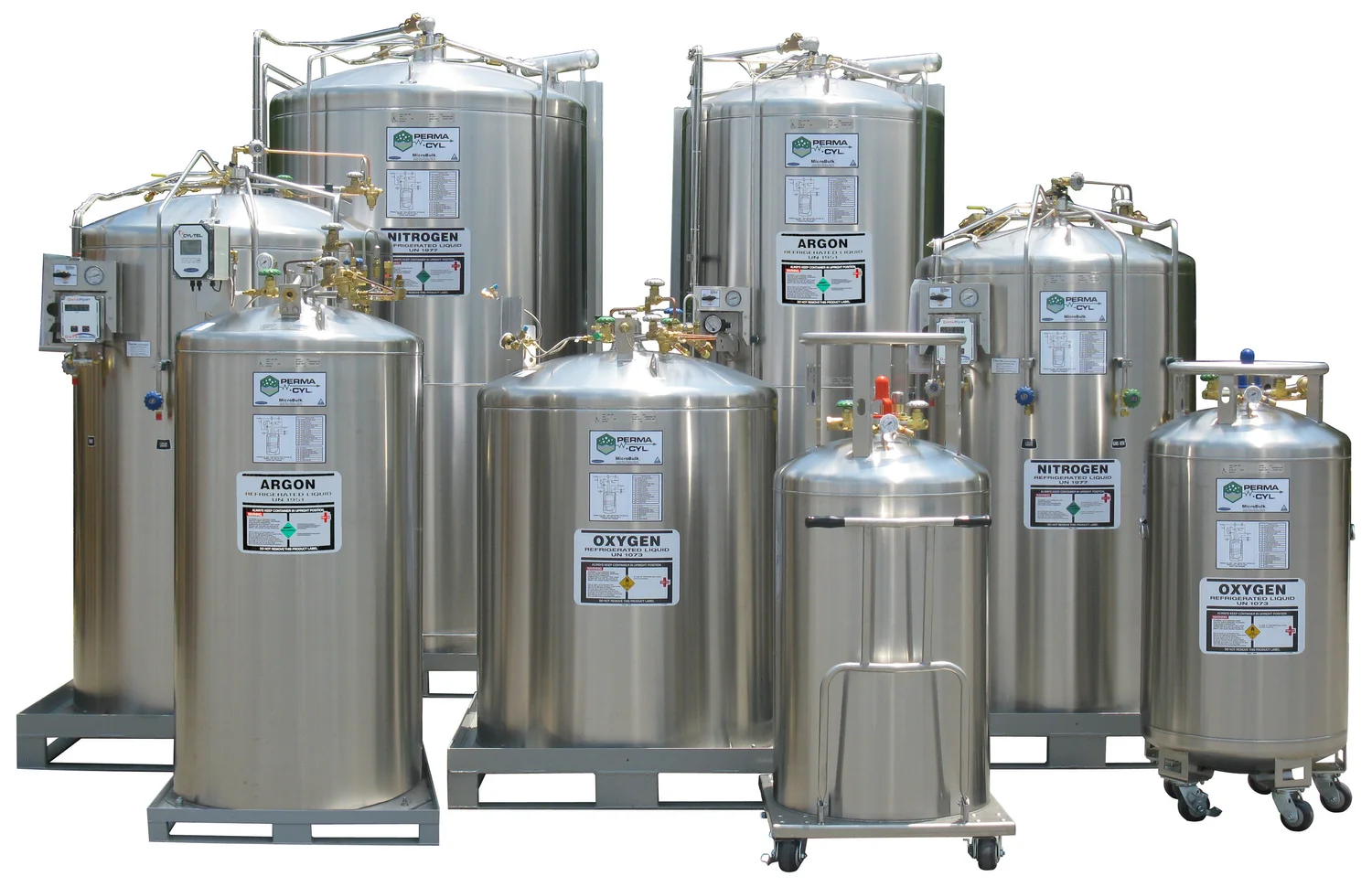
Microbulk systems are engineered for Nitrogen, Oxygen, Argon, and CO₂, serving applications such as metal fabrication, food processing, labs, water treatment, and controlled environment agriculture.

3: Can microbulk systems be monitored remotely?
Yes. Linde microbulk tanks support telemetry enabled level monitoring, helping maintain uninterrupted supply by automatically signaling refill needs.

4: How does microbulk align with Canadian OHS requirements?
OHS frameworks emphasize reducing manual material handling, proper securing of hazardous materials, and workplace hazard prevention—all areas supported by stationary microbulk storage that minimizes cylinder movement.

5: Are microbulk tanks flexible in installation?
Yes. Microbulk systems can be installed indoors or outdoors, and optional wall box filling allows refills without entering the facility.

Summary

Canadian industries are navigating new challenges: labour shortages, automation, supply chain volatility, and sustainability expectations. Microbulk systems deliver continuous supply, reduced manual handling, safety alignment with OHS frameworks, and predictable inventory management.

Microbulk provides:

  • Continuous supply with reduced downtime
  • Lower labour effort and fewer manual interventions
  • Consistent pressure and eliminates residual waste
  • Telemetry enabled visibility

1. Industry Trends Driving Microbulk Adoption

Automation & Workforce Efficiency

As Canadian manufacturers adopt automation and "lights out" shifts, they require consistent supply systems that do not depend on operator availability. Microbulk’s continuous supply and telemetry help support these environments (industry trend; generalized).

Resource Optimization

With labour shortages across manufacturing sectors, reducing manual handling—such as moving cylinders—supports productivity and ergonomic safety.

2. Safety & Compliance Under Canada’s OHS System

  • Reducing workplace hazards
  • Controlling risks from equipment and materials
  • Minimizing manual handling risk
  • Ensuring proper storage of compressed gases

Microbulk supports these expectations by eliminating frequent cylinder movement, reducing strain risk, decreasing manual transport of high pressure containers, and shifting supply interaction to a secured fill point.

3. Technical Overview of Linde Microbulk Systems

Model Net Capacity (L) MAWP (psig) Delivery Rate (scfh) Diameter (in) Height (in) Diameter (cm) Height (cm)
450VHP 420 500 575 30 68.0 76.2 172.72
700HP 645 350 660 42 60.0 106.68 152.4
1000HP 950 350/500 960 42 77.0 106.68 195.58
1500VHP 1455 350/500 1350 48 91.0 121.92 231.14
2000VHP 1945 350/500 2000 48 117.0 121.92 297.18
3000VHP 2707 350/500 2000 59 122.5 149.86 311.15

These models give you flexibility in:

  • Pressure and flow requirements
  • Space availability
  • Buffering capacity
  • Refill frequency
  • Installation layout

4. Supply Chain Resilience

CO₂ supply volatility—especially in food and beverage operations—has led organizations to seek more reliable onsite storage.

Microbulk provides:

  • Larger onsite buffer volumes
  • Automated refill notifications
  • Reduced dependency on frequent delivery cycles

5. Total Cost of Ownership (TCO) Evaluation Framework

A TCO assessment should include:

Operational Factors

  • Time lost to changeouts
  • Purging interruptions
  • Floor congestion from cylinder storage

Logistics Factors

  • Delivery frequency
  • Inventory management overhead
  • Residual gas loss

Safety & Training Factors

  • Manual handling training requirements
  • Ergonomic and hazard exposure risk
  • Compliance duties under provincial/federal legislation

Microbulk reduces several of these cost drivers through stationary storage and telemetry supported management.

6. Decision Matrix: Is Microbulk a Fit?

Strong indicators include:

  • Stable or growing gas usage
  • Repeated cylinder related downtime
  • Multi shift or automated operations
  • Space optimized environments
  • ESG/logistics optimization goals
  • Need for predictable, monitored supply

7. Future Ready Infrastructure

Industrial modernization in Canada includes:

  • Digital monitoring
  • Predictive maintenance
  • Automation of routine operational tasks

Microbulk’s telemetry capability aligns with these initiatives, enabling data driven planning.

8. Representative Use Cases

  • A fabrication shop reducing manual handling through stationary supply
  • A food processor requiring consistent CO₂ volume for modified atmosphere packaging or carbonation
  • A laboratory needing high purity, stable supply for analytical processes
  • A water treatment facility using CO₂ for pH control and improved process stability

Ready to strengthen your facility’s gas supply reliability, safety, and efficiency?

Request a no obligation Microbulk Assessment today. Our team will:

  • Review your consumption patterns
  • Evaluate your operational and safety requirements
  • Recommend the right tank size, installation configuration, and telemetry approach tailored to your goals